
1. Reception and Registration
- The spindle is received either directly from the customer or via courier shipment.
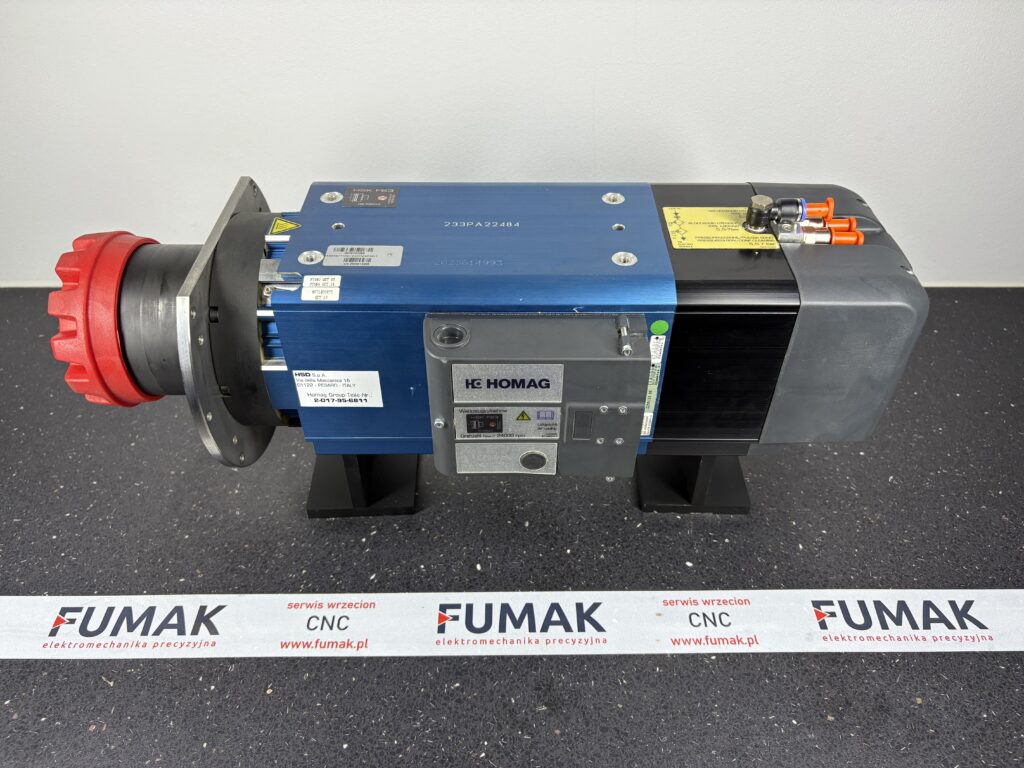
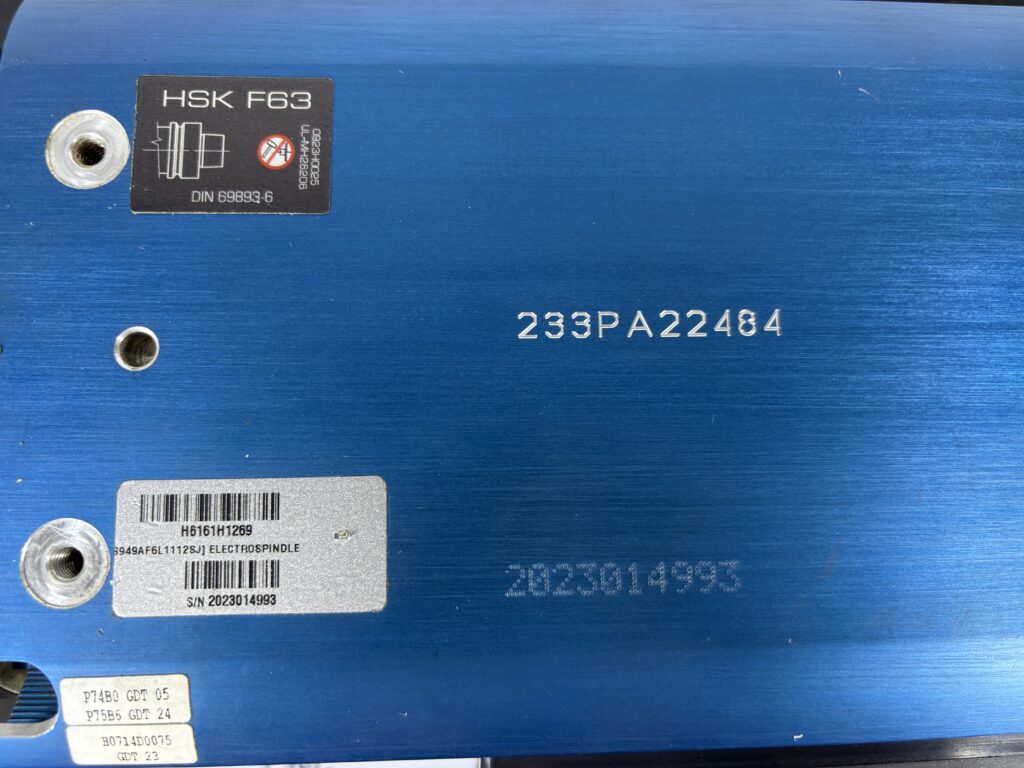
- The order is registered in our system — including customer data, spindle model and serial number, taper type (HSK F63), maximum speed (24,000 RPM), and reported symptoms.
- An initial visual inspection is performed to check for external damage, overheating marks, contamination, or leaks.
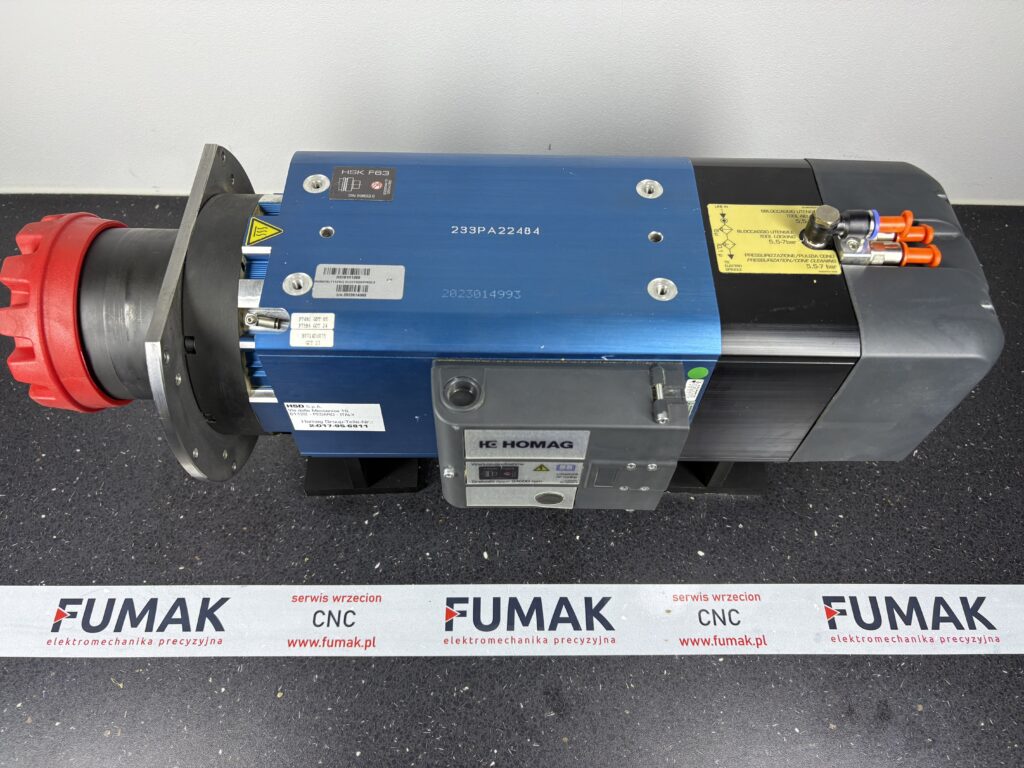
- High-resolution “before” photos are taken and stored in the service file for documentation and comparison after repair.
2. Initial Diagnostics (Before Disassembly)
- The spindle is connected to a test bench and briefly run under no-load conditions.
During this phase we record:- Sound and noise behavior (unusual vibration, knocking, whine),
- Vibration levels,
- Temperature rise (via infrared thermometer or thermal camera),
- Electrical current and resistance readings.
- Electrical tests include:
- Winding resistance and insulation measurement (megger test),
- Current draw across different RPM levels,
- Basic vibration analysis (axes X/Y/Z at several speeds).
- A preliminary diagnostic report is created with recommendations — e.g. bearing replacement, rewinding, cooling system repair.
3. Disassembly and Documentation
- Each component is carefully marked for reassembly alignment and orientation.
- External covers, toolholders, and cooling lines are removed.
- The spindle is extracted from its housing using lifting tools to prevent damage to taper surfaces or bearing seats.
- Each stage of disassembly is photographed and recorded, including part numbers and observations.
4. Cleaning and Surface Preparation
- Rough cleaning — removal of chips, dirt, and excess grease.
- Precision cleaning using ultrasonic baths or approved solvents, ensuring material compatibility (especially important for spindles with internal cooling circuits).
- Drying and surface inspection for scratches, wear, or corrosion.
5. Detailed Inspection and Measurement
- Geometrical checks:
- Taper runout (radial and axial),
- Concentricity and straightness of the shaft,
- Bearing seat clearance and axial play.
- Non-destructive testing (NDT):
- Magnetic or dye-penetrant inspection if cracks are suspected.
- Bearing analysis:
- Condition of rolling elements, races, cages, signs of discoloration or overheating.
- Electrical inspection:
- Winding insulation and resistance, lead condition, stator core inspection.
- Cooling system check:
- Integrity of channels, seals, and connectors.
6. Service Decision and Cost Estimate
- Based on diagnostic results, a detailed quotation is prepared, listing all replacement parts and recommended operations.
- The customer reviews and approves the repair scope — we also offer “Basic” and “Premium” regeneration packages with different warranty terms.
7. Bearing Replacement and Mechanical Restoration
- Removal of old bearings using specialized tools and presses.
- Inspection and, if necessary, re-machining or regrinding of bearing seats to restore precision fits.
- Installation of new high-precision bearings (from top manufacturers) using controlled heating or pressing procedures.
- Replacement of seals, O-rings, spacers, and cooling components.
- Greasing or oil lubrication according to manufacturer recommendations and bearing specifications.
8. Electrical Rewinding and Component Repair (If Required)
- Rewinding of stator or rotor coils using high-grade materials and precise winding patterns.
- Replacement of internal cooling lines, thermistors, and connectors as needed.
- Post-repair electrical tests: resistance, insulation, and dielectric strength measurements.
9. Assembly and Preliminary Adjustment
- The spindle is reassembled following original markings and torque specifications.
- Bearing preload and axial clearances are set according to manufacturer tolerances.
- Rotational smoothness is checked manually before proceeding.
10. Dynamic Balancing
- The spindle undergoes both static and dynamic balancing using a precision balancing machine.
- Balancing is performed in one or multiple planes depending on design, reaching accuracy levels compliant with ISO G-class standards.
- All results are documented and attached to the final report.
11. Performance and Load Testing
- No-load testing: The spindle is run through its full speed range (up to 24,000 RPM) while monitoring:
- Vibration levels,
- Temperature rise,
- Electrical parameters (current, voltage, phase balance).
- Load simulation: In certain cases, we apply a controlled load to simulate cutting forces.
- Thermal monitoring: Temperatures of bearings and windings are continuously recorded.
- FFT vibration analysis: Frequency spectrum is analyzed to identify harmonics or potential resonance.
- Tool interface repeatability test: Ensures precise taper positioning and clamping consistency.
12. Final Quality Control
- Comparison of all key parameters with manufacturer specifications.
- Final measurements of runout, vibration, current, and temperature.
- Preparation of complete measurement documentation: before/after results, charts, and photos.
- Issuing a FUMAK Quality Certificate and detailed service report.
13. Packing and Shipping
- All critical surfaces (taper, shaft ends) are protected with covers and anti-corrosion films.
- The spindle is packed in a secure wooden crate or reinforced carton with anti-shock filling.
- Documentation included:
- Service report,
- Measurement certificates,
- Warranty card,
- Handling instructions.
- Shipment is arranged by FUMAK or the customer’s logistics partner.
14. Warranty and After-Sales Support
- All FUMAK spindle regenerations include a written warranty covering both labor and parts.
- Post-service support:
- Technical consultation via phone or online,
- On-site inspection (if needed),
- Preventive maintenance recommendations.
- Customers receive suggestions for maintenance intervals and condition monitoring best practices.
15. Optional Services
- Cooling system modernization or additional temperature sensors.
- Foto report of the entire repair process.
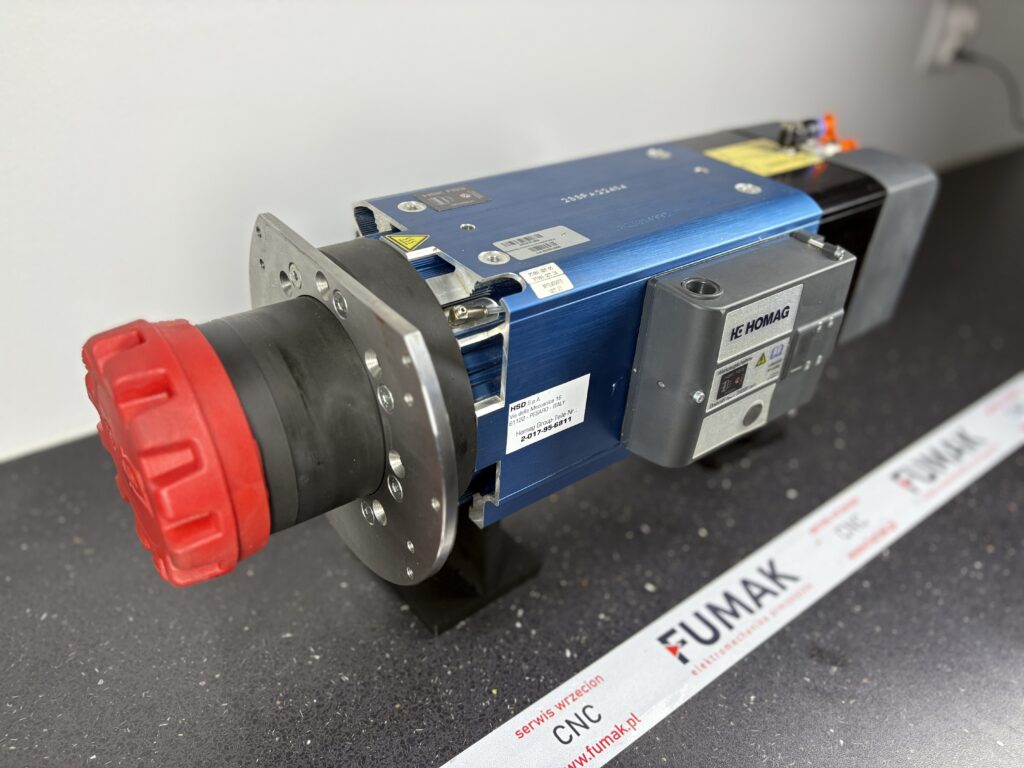
16. How to Prepare a Spindle for Shipment
- Disconnect the machine from power.
- Secure the tool taper to prevent movement.
- Clean external surfaces of coolant and chips.
- Pack the spindle securely in a padded box or crate.
- Include a note describing symptoms, visible damage, and contact details.
- Contact FUMAK before shipping — we will provide full transport instructions.
17. FAQ — Common Customer Questions
Do you only replace bearings?
Not necessarily — bearing replacement is just one step in a complete regeneration process. The full scope is determined after diagnostic testing.
Will the spindle perform like new?
Our goal is to restore the spindle’s precision and performance to factory-level parameters within allowable tolerances. In some cases, if major damage is found, certain components may be replaced entirely.
Do I receive a report?
Yes — each spindle repair comes with a detailed before and after report including measurements, vibration graphs, and high-resolution photos.